
Formation
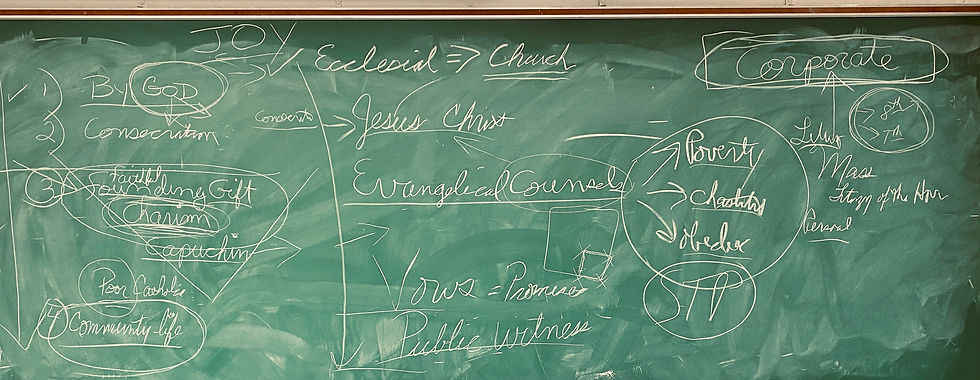
Formation is a lifelong process of helping the religious conform his or her life to that of Jesus Christ through the particular charism of the community. The first years of religious life are known as initial formation, and culminate, God-willing, in profession of Final Vows.

As Franciscans of the Eucharist of Chicago, our formation stages include:
.jpg)
POstulancy
This is a time of initial formation and continued discernment. The postulant lives in community and participates in the daily life of the sisters and friars, learning about how our community prays, what the apostolate is like, and experiencing life in community. Postulants receive the San Damiano cross and wear a postulant uniform as a sign of their desire to follow Jesus as a Franciscan of the Eucharist. During this time, postulants also have regular class and individual meetings with formators, receive spiritual direction with a director from outside the community, and participate in in-house classes. The postulant is free to leave the community at any time. (6 months - 1 year)
Novitiate
Building upon the postulancy experience, the novitiate is a time more set apart for prayer and study. Built into this time is limited, hands-on exposure to the community’s apostolate. This is also a time when the young Franciscan pulls back more intentionally from extra social obligations to focus more time on developing his or her relationship with God. Novices continue to participate in in-house classes, individual and class meetings with formators, and external spiritual direction. During novitiate, special attention is given to studying the Evangelical Counsels (poverty, chastity, and obedience) in preparation for professing temporary vows. A novice promises to live the life of the community and takes on the religious habit, but is free to leave the community at any time. (2 years)
.jpg)
.jpg)
Temporary profession
Temporary professed friars and sisters vow to live in poverty, chastity and obedience. These vows are professed for one year at a time and renewed annually. Temporary professed members are incorporated into more of the community’s life and apostolate. While temporary professed members will still participate in some in-house classes in preparation for Final Vows, meetings with formators, and regular spiritual direction, they also begin formal theological studies at Mundelein Seminary (see below for more details). A temporary professed members might also begin studies to prepare to teach in our teaching apostolate. Though not required, there is the opportunity to make the full Spiritual Exercises in a 30-day retreat format in order to prepare for Final Vows. (3-5 years)
FINAL OR SOLEMN profession
Priests, brothers, and sisters who profess final or solemn vows have discerned that religious life as a Franciscan of the Eucharist is truly their vocation, the state of life that is their path to holiness. They are consecrated to God forever. Even though the sister or friar has made this commitment, they will participate in ongoing formation (see below) throughout their entire life, always seeking to grow in their relationship with the Lord. Finally professed members also continue to have opportunities for spiritual direction and participate in periodic whole-community formation presentations, workshops, and discussions.

FORMATION CLASSES
Throughout initial formation, young Franciscans have many wonderful opportunities to study and grow in their understanding of the Church's teachings on Religious Life, the Franciscan Charism, Prayer, the many teachings of our Catholic Faith. In-house formation classes are taught by Bishop Bob, finally professed members of the community, and special guest instructors.
In-house formation classes offered throughout postulancy and novitiate include:
Spirituality 101
Human Formation
Catechism of the Catholic Church
Essential Elements of Religious Life study
Franciscans History & Spirituality
Interior Freedom
Letter to Women study
Understanding Emotions & Anxiety
Vita Consecrata study
Perfectae Caritatis study
Canons on Religious Life
Discernment of Spirits
Sacrosanctum Concilium study
Franciscan Sources
Theology of the Body I & II
Prayer
Postulant and Novice Special Topics
Additional formation opportunities

Theological Graduate studies at Mundelein Seminary
During formation, especially temporary vows, young friars and sisters focus special attention on deepening their knowledge of the Catholic faith in order to help them be prepared to serve in our evangelization, teaching, and preaching apostolates. All Franciscans study in the Master of Arts in Pastoral Studies program at Mundelein Seminary. Any of our friars who are called to the priesthood would study as seminarians in the Master of Divinity program at Mundelein Seminary. We are very grateful to Cardinal Cupich and the current Rector, Fr. John Kartje, for these excellent opportunities for the continued theological, pastoral, and spiritual formation provided at Mundelein Seminary for our community. We currently have sisters and friars begin studies at Mundelein after professing temporary vows.
Master of arts in teaching
One of our community's apostolates is to teach religion in poor Catholic Schools. Those who serve in this apostolate are required to be licensed teachers by state law. Our members are able to fulfill this requirement by studying in a Master of Arts in Teaching program if he or she doesn't already have a teaching license. Studies for licensure would begin after a Franciscan has professed temporary vows and has completed his or her theology studies at Mundelein Seminary. In the past, our community has used both Dominican University and DePaul University to study for Master degrees in teaching. Those who already a hold teaching license upon entering the community are not required to obtain an additional teaching degree and may begin participation in the teaching apostolate after completing theological studies.


ongoing formation
The Church's teaching is clear that formation does not end with the profession of vows. Vita Consecrata tell us, "Precisely because it aims at the transformation of the whole person, it is clear that the commitment to formation never ends." (n. 65) Ongoing formation is the term used to refer the continued opportunities for spiritual, human, and apostolic growth that are made available to members beyond the years of initial formation. In our community, ongoing formation includes periodic whole-community formation classes or workshops as well more individualized opportunities based on the mutual discernment of the fully professed friar or sister and the guardian (superior). Some examples of ongoing formation opportunities our members have attended in recent years include: Spiritual Direction training, mental health trainings to assist in serving in the apostolate, summer intensive courses through the Vita Consecrata Institute, Theology of the Body trainings, retreats and conferences offered through the John Paul II Healing Institute, Formator Conferences, and yearly conferences with the Institute on Religious Life.
